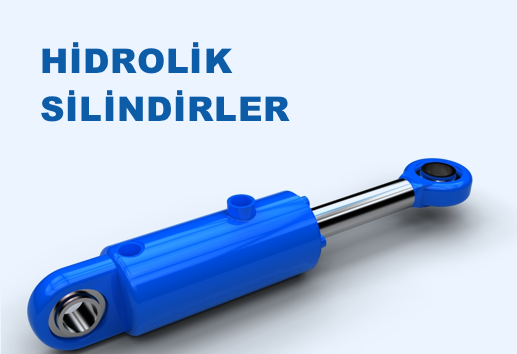




As is known hydraulic cylinders also known as linear motors are hydraulic equipment that convert hydraulic energy of the fluid to mechanical energy. Almost all of hydraulic systems stimulate a hydraulic cylinder finally. No matter how incisive is the selection of hydraulic unit equipment, the output equivalent of this selection can be achieved by hydraulic cylinders.
Hydraulic cylinders that are not designed and produced by not taking specific principles into account may not display the expected performance. Consequently the whole of the hydraulic system is affected by it and may cause serious financial losses.
TO GET ACQUAINTED WITH HYDRAULIC CYLINDER
Figure 1. SOLID MODEL CYLINDER DRAWING
Figure 2. 2D ASSEMBLY DRAWING

CONSTITUENT PARTS OF HYDRAULIC CYLINDER
1. BARREL (CYLINDER TUBE)
Its material is st 52-3 quality unless otherwise requested. Inner surface of the barrel is honed.
2. ROD (BAR)
It may be produced from stainless derivatives, tempered steel according to filed standards Ck 45 in the domestic market and St 52 in the foreign market.
There is movable covering inside the cylinder which is corrosion-resistant in contact with external environment during operation.
3.FRONT BEARING SHIELD (CAP)
Its material can be produced from cast iron, nodular cast iron or unalloyed steel.
Its connection to the barrel can be screwed or bolted connection. It not only bears seals but also performs bearing.
4.PİSTON
Its material can be produced from cast iron, nodular cast iron or unalloyed steel. It bears seals that prevent internal leakage. It also performs bearing.
5.REAR BEARING SHIELD
Its material should be chosen from St 52-3 to comply with the bearing shield. In case of absence, unalloyed steel with low carbon ration. Its function is to close rear end of the bearing shield and carries junction piece.
6.ROD END AND BEARING SHIELD END
Its material should be chosen from St 52-3 to comply with the bearing shield. Its ready-made productions are available as well as different connection types that are requested in machine construction.
• Please click the following link for cylinder operating manual.